
It’s easy to forget how much the idea of “entertainment” has stretched over the past few years. It used to mean fairly simple things: watching something, playing something, listening to something. In 2026, it’s a far messier, more blended experience. We jump between apps, platforms, games, and services without really thinking about the borders between them. One minute you’re streaming, the next you’re in a game, the next you’re checking a wallet or a feed or a message thread.
That blur is where a lot of newer platforms live now — and it’s also where a name like Winna keeps quietly surfacing.
Not in the way big brands announce themselves, with noise and spectacle, but in the background: mentioned in passing, recommended in the margins, brought up as an example of “the way things are going.” After seeing it crop up often enough, it felt like the right moment to stop scrolling past it and actually spend some time with it.
Rather than approach this like a traditional, box-ticking casino review, it makes more sense to treat Winna the same way we would any other digital entertainment platform — by using it, sitting with it, and seeing what kind of experience it actually offers. That curiosity led us to take a closer look at Winna, not as a sales pitch or a warning sign, but as a small snapshot of where a certain corner of online culture seems to be heading.
The first thing that becomes obvious is how little Winna tries to introduce itself.
There’s no grand welcome, no guided tour, no helpful overlay explaining what to click first. You connect a wallet, you fund it, and you’re in. That’s it. It feels less like signing up to a traditional gambling site and more like opening a modern app that assumes you already know the rules of the world you’re stepping into.
That assumption runs through the entire experience.
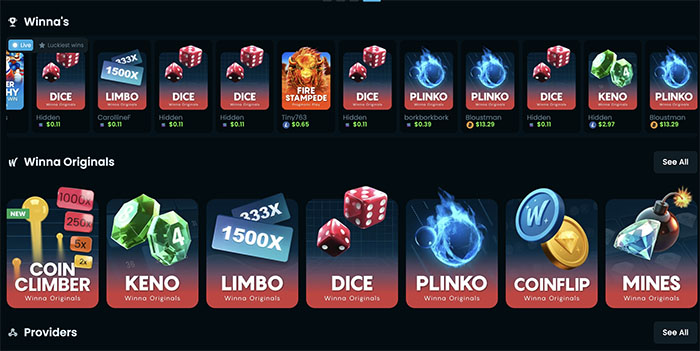
Visually, the platform is restrained in a way that feels almost deliberate. There’s no visual shouting, no flashing banners, no constant prompts telling you what you “should” be doing next. The interface is clean, calm, and quietly functional. It doesn’t try to charm you or overwhelm you. It just sits there and lets you get on with it.
That alone makes it feel very different from much of the online casino landscape, which still tends to lean heavily on noise and urgency. Winna feels… confident enough not to.
It also makes it clear who this is really for.
Winna isn’t particularly interested in onboarding people who are still figuring out what crypto is. It doesn’t explain wallets, it doesn’t explain networks, and it doesn’t try to sell the idea. It’s built for people who already live part of their digital lives in that space and would rather not deal with long verification processes or paperwork.
If you’re coming from a more traditional background — bank transfers, ID uploads, waiting periods — the experience can feel almost too stripped back. But for its intended audience, that minimalism is the point. It’s not about being welcoming in the traditional sense. It’s about being efficient.
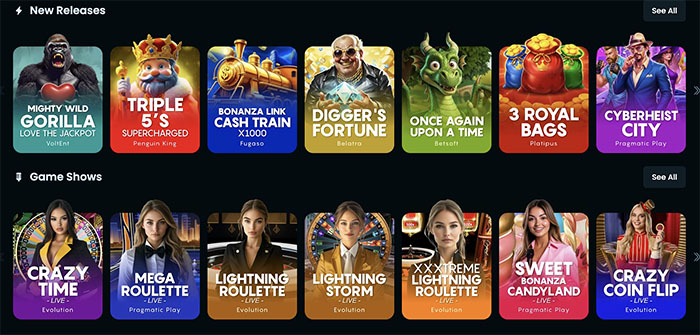
Once you start exploring, the scale of the platform slowly reveals itself. On paper, Winna’s game library is enormous, running into the thousands. In practice, it never feels like you’re drowning in options. Browsing is smooth, filters actually help, and the layout makes it easy to move between different sections without losing track of where you are.
Slots make up a large part of the catalogue, ranging from very simple, low-commitment games to more complex, feature-heavy ones. There’s also a full live dealer section that feels properly integrated rather than bolted on as an afterthought, and a built-in sportsbook that makes the whole platform feel more like a single, coherent ecosystem than a collection of separate features.
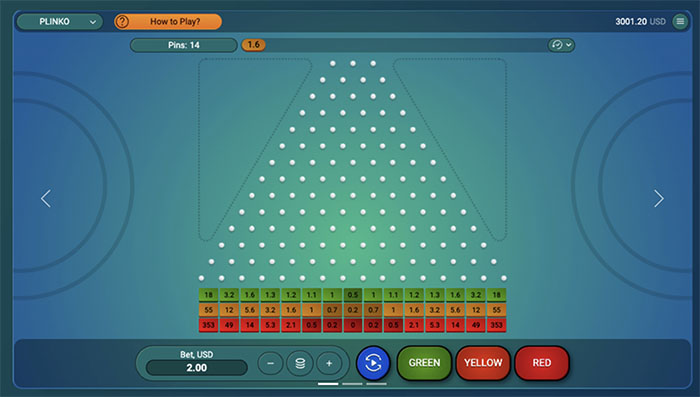
Winna’s own Originals lean into the idea of provably fair gaming — a concept that feels very much of the crypto era. Instead of relying purely on trust, these games allow outcomes to be verified. Most people will never actually check the mechanics behind this, but the philosophy matters. It reflects a broader shift in how digital platforms try to earn credibility: not by asking users to believe them, but by building systems that can, at least in theory, be questioned.
If there’s one detail that keeps coming up whenever Winna is mentioned, though, it’s withdrawals.
In an industry that has conditioned users to expect delays, vague processing times, and a certain amount of friction, Winna’s approach feels almost disarmingly straightforward. Withdrawals are processed quickly and sent directly to the blockchain. From there, users can track the transaction themselves. The final timing depends on the network you’re using, but the platform itself doesn’t seem interested in adding its own layer of waiting.
It sounds like a small thing, but it changes the emotional tone of the whole experience. Instead of feeling like you’re waiting for permission, it feels more like you’re simply moving your own funds. In a space where trust has often been the first casualty, that difference carries more weight than any marketing slogan.
Promotions are present, but they’re not the centre of gravity. There are welcome offers, reload bonuses, cashback, and occasional tournaments, but they don’t dominate the interface or constantly interrupt what you’re doing. They feel like optional extras rather than the main reason the platform exists.
Where Winna does seem to focus more energy is in its VIP system. For regular users, there are tangible perks: dedicated hosts, more personalised bonuses, better cashback, and faster support. There’s also a VIP transfer option for people coming from other platforms, which helps explain why Winna seems to attract a fairly experienced, crypto-comfortable crowd rather than complete newcomers.
What’s interesting is how little of Winna’s reputation seems to come from traditional marketing. It doesn’t rely on big campaigns or celebrity faces. Most of its visibility appears to come from word of mouth and user feedback. Looking across public reviews, the same themes tend to surface again and again: fast payouts, a clean interface, and responsive support. The criticisms are usually about preferences — more promotions, more games — rather than fundamental problems with how the platform works.
Stepping back from the details, Winna feels less like a “casino brand” and more like a product of a wider shift in how digital services are being designed. It shares more DNA with modern fintech and crypto platforms than with the loud, hyperactive gambling sites of the past. It’s built around speed, low friction, and a quiet confidence that the user already knows what they’re doing.
For TotalNtertainment readers, that’s probably the most interesting part of the story. Winna isn’t just another place to play games. It’s a small example of how entertainment, technology, and finance continue to fold into each other online — often so smoothly that we barely notice it happening.
This isn’t a recommendation or a warning. It’s simply a snapshot of what one corner of digital entertainment looks like in 2026. As always, it’s best approached as entertainment, not as a plan or a promise. But as a sign of where things are heading, Winna is very much part of the wider conversation.







Comments are closed.