
The Art of the Sleeve: 6 Iconic British Album Covers and the Stories Behind Them
In the age of digital streaming, where music is often consumed as single tracks plucked from algorithmic playlists, the album cover has fought a brave battle for relevance. Yet, a truly great album cover remains a vital cultural artifact. It is the visual shorthand for a generation, a door into the world the artist has created. In British music history, the album sleeve has often been treated as an extension of the songwriter’s vision, a canvas that is just as important as the music etched into the grooves.
From the kaleidoscopic pop-art experiments of the 60s to the gritty, observational realism of the 90s, Britain has produced some of the most recognisable imagery in music history. Let’s take a look back at six iconic British album covers and the fascinating stories that birthed them.
1. The Beatles: Sgt. Pepper’s Lonely Hearts Club Band (1967)
If you were to rank the most influential album covers of all time, Sgt. Pepper would be sitting comfortably at the top. The image of the Fab Four in their psychedelic, military-inspired suits, surrounded by a cardboard collage of historical and cultural icons, remains a benchmark for high-concept art.
According to the Victoria and Albert Museum, this sleeve was designed by artist Peter Blake and his wife Jann Haworth. It was revolutionary because it broke the mold of the typical, artist-focused portrait. It turned the album into an event, an invitation into a fictional world, and a conversation piece. It proved that an album cover could be a piece of modern art in its own right, paving the way for decades of creative visual storytelling.
2. David Bowie: The Rise and Fall of Ziggy Stardust and the Spiders from Mars (1972)
Contrast the vibrant maximalism of Sgt. Pepper with the rain-soaked, urban solitude of David Bowie’s Ziggy Stardust. The cover features Bowie standing under a streetlamp on Haddon Street in London, holding his guitar case. It is a perfect encapsulation of the era: gritty, moody, and undeniably cool.
What makes this cover so compelling is its “everyman” quality. Despite the fact that the album is about an extraterrestrial rock star, the cover art grounds him in the very real, very mundane streets of London. It creates a tension between the ordinary and the extraordinary that defines Bowie’s entire career. It is an image that feels like a still from a movie, capturing a singular, quiet moment before the chaos of stardom takes over.
3. Blur: Parklife (1994)
If Ziggy Stardust captured the quiet solitude of London, Blur’s Parklife captured its vibrant, chaotic, and unapologetically working-class heartbeat. The cover art is perhaps the definitive visual of the Britpop era. It features a greyhound mid-stride, captured at the Walthamstow Stadium, embodying the restless, energetic spirit of the record itself.
The choice of the greyhound was deliberate, reflecting the band’s obsession with the quirks of British life. It was a nod to the betting shop culture that permeated the London landscape of the 90s, where the local track was a vital social hub. The greyhound represents that specific, high-stakes British tradition; even today, many enthusiasts enjoy betting on greyhounds as a way to stay connected to that same sense of speed and classic competition. It is a visual celebration of a very particular kind of excitement that, much like the music on the album, feels quintessentially British.
4. Joy Division: Unknown Pleasures (1979)
Minimalism reached its peak with the cover of Joy Division’s Unknown Pleasures. Designed by Peter Saville, the sleeve features a series of white jagged lines against a black background, a visualisation of the radio waves from the first pulsar ever discovered.
There is no band name, no album title, just a stark, haunting scientific image. The cover is a masterpiece of design, perfectly mirroring the cold, introspective, and atmospheric sound of the record. As The Design Museum has noted, it is one of the most widely reproduced images in popular culture, having moved from the record store shelf to T-shirts and posters, becoming a symbol of post-punk identity that transcends the music itself.
5. Oasis: Definitely Maybe (1994)
If Blur captured the “Parklife” energy, Oasis captured the domestic reality of the Manchester suburbs. The cover of Definitely Maybe is cluttered, messy, and lived-in. It features the band members lounging in guitarist Bonehead’s living room, surrounded by guitars, vinyl, cigarettes, and posters of Burt Bacharach and George Best.
It was an anti-fashion statement. While other bands were trying to look cool, Oasis were just trying to look like themselves, or at least, the version of themselves they wanted the world to see. It’s an image that invites you into their world; it feels like you’ve just walked in on a band that is about to change the world, whether they know it or not.
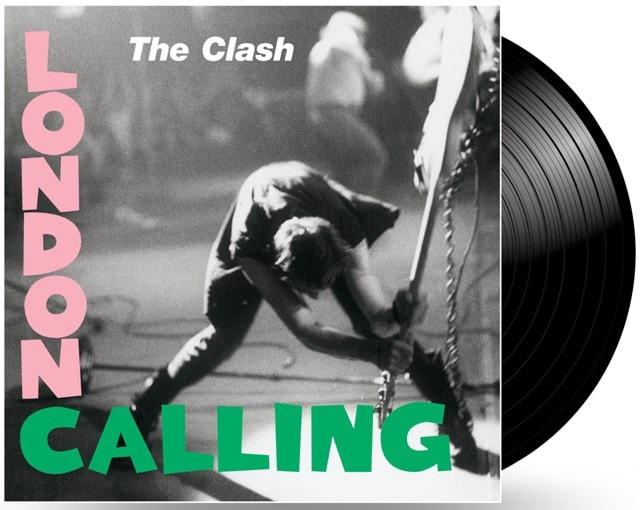
6. The Clash: London Calling (1979)
Captured by photographer Pennie Smith, the image of Paul Simonon smashing his bass guitar on stage at The Palladium in New York City is the epitome of punk rock energy. It is raw, dangerous, and spontaneous.
As noted by The Rock and Roll Hall of Fame, the photo was initially rejected by the band’s graphic designer because it was technically out of focus, but the band insisted on using it. It is a perfect metaphor for The Clash: they weren’t interested in polish; they were interested in the moment. The album title and the font choice—a direct homage to Elvis Presley’s self-titled debut—created a brilliant contrast between the “King of Rock ‘n’ Roll” and the new, angry kids on the block.
The Lasting Legacy of Album Art
Whether it’s the psychedelic collage of the 60s, the scientific minimalism of post-punk, or the gritty realism of the Britpop era, the best album covers tell a story. They tell us who the artist is, where they come from, and what they value. They invite us to listen to the music, but they also invite us to look closer at the world around us.
As we move further into a digital-first world, these physical covers remain a testament to a time when the visual and the auditory were inseparable. They act as time capsules, keeping the energy, the attitude, and the culture of their respective decades alive for a new generation of listeners to discover. So, the next time you pick up a record or browse through your digital library, take a second to look at the cover art. You might just find a story that’s just as good as the songs themselves.








Comments are closed.